 +91 7550360374
 info@digitalbizstar.com


What is an AEO tool?
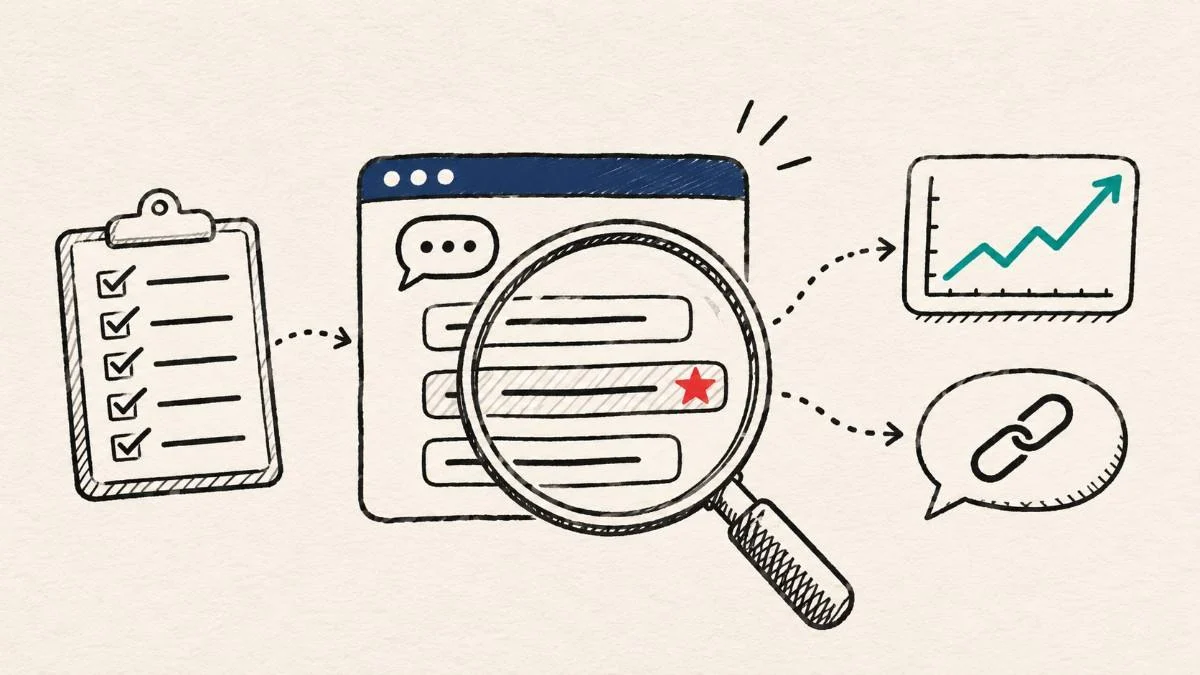
An AEO (answer engine optimization) tool, also sold as a GEO tool or AI visibility tool, tests the questions your buyers ask AI assistants and records what comes back. If the terms are new to you, start with AEO vs SEO vs GEO. Most tools report four things:
- Mentions: does the answer name your brand at all?
- Citations: does it link to one of your pages as a source?
- Share of voice: how often you appear compared with named competitors.
- Sentiment: whether the answer describes you accurately and positively.
Some tools also check your pages for technical readiness, such as whether AI crawlers can reach them and whether answers sit in clear, quotable text.
It matters because buyers now ask AI first. About half of US adults (49%) used AI chatbots in early 2026, up from a third in 2024 (Pew Research Center). Among B2B buyers, 45% used AI during a recent purchase (Gartner, March 2026).
Two kinds of AEO checking software
Google’s own AI Overview for this search splits the market in two, and that split is the most useful way to shop.
One-time checkers give you a snapshot. You enter your brand or a URL and get a report on what AI tools say about you, or how ready a page is. They are often free, and they are a good first step.
Ongoing trackers run a fixed set of prompts every day or week across several AI engines. They show trends and competitor share of voice, plus which of your pages get cited. They need a monthly plan and someone to act on the data. Pair them with AI search traffic tracking in analytics, so you see visits and enquiries, not only mentions.
Start with a one-time check. Move to a tracker only when you are ready to make changes every month, because tracking without fixing just records the problem.
AEO checking tools compared
We checked each tool’s own site or the vendor’s own published comparison on 25 November 2026. Features change often, so confirm before you buy.
| Tool | Type | AI engines named | Free option |
|---|---|---|---|
| HubSpot AI Search Grader | One-time brand check | ChatGPT, Perplexity, Gemini | Free, no account needed |
| Otterly.AI | Ongoing tracker | ChatGPT, Perplexity, Gemini, Claude, Copilot, AI Overviews, AI Mode | Free trial |
| Similarweb AEO | Ongoing tracker, plus AI traffic data | ChatGPT, Gemini, Perplexity, AI Mode | Free trial |
| SE Visible (SE Ranking) | Ongoing tracker | ChatGPT, Gemini, AI Overviews, AI Mode | 10-day trial |
| Profound | Enterprise tracker | Several major engines, tracked through real browsers (its own claim) | Check with the vendor |
| Semrush and Ahrefs add-ons | Tracker inside an SEO suite | Varies by plan | Part of the suite |
The table is our own summary. A tool that says it covers more engines is not automatically better: check that it covers the engines your buyers actually use.
How to check your AEO for free
You can run a useful check in an hour without any software:
- Write 15 to 20 prompts your buyers would type, in their words. For example: “Best accounting software for a small manufacturer in India” or “Who can fix my website so it shows up in ChatGPT?”
- Run each prompt in ChatGPT and Perplexity, then in Gemini and Google. Use a logged-out or private window so past chats do not bias the answer.
- Record three things in a spreadsheet: whether you are mentioned, whether you are cited with a link, and which competitors appear instead.
- Repeat monthly with the same prompts, so you compare like with like.
AI answers vary from one run to the next, so treat one result as a sample, not a verdict. Patterns over several weeks are what count.
What to look for before you pay
When a free check is no longer enough, compare tools on these points:
- Engine coverage: the engines your buyers use, not the longest list.
- Prompt control: you should be able to see and edit every prompt it tracks.
- Citation detail: which of your URLs gets cited, so you know which pages to improve.
- Refresh rate: daily or weekly data. Monthly data moves too slowly for most teams.
- How data is collected: some tools query AI models through an API, others record the answers real users see. Ask which, because results can differ.
- Reporting: exports, scheduled reports and, for agencies, white-label options.
Choosing a tool by type of business
B2B SaaS. Track comparison and alternative prompts (“best tool for X”, “X vs Y”), because that is where buyers shortlist. Citation-level data matters most here. Our guide to AEO and GEO for SaaS covers which pages to fix first.
Local businesses and hotels. Many AI answers for local searches draw on Google Business Profile and review sites. A one-time check plus a well-kept profile often does more than a paid tracker.
Ecommerce brands. Look for product-level prompts and tracking in shopping-style answers. Keep your Merchant Center feed accurate, since Google names it as an input for its AI features.
Accounting and legal firms. Focus on accuracy. Check that AI tools describe your services correctly, and fix the sources they rely on when they don’t.
Agencies. Choose a tool with multi-client workspaces and white-label reports, so you can show clients progress in their own brand.
Self-serve AEO tools vs a full-service agency
A tool tells you where you stand. It does not rewrite your pages or earn mentions for you, and that work is the real cost of AEO.
| Self-serve AEO tool | Full-service AEO agency | |
|---|---|---|
| What you get | Data on mentions, citations and competitors | Data plus the fixes: content, technical work, mentions |
| Your team’s time | Several hours a month to act on the data | A review call and approvals |
| Best for | Teams with an in-house SEO or content writer | Teams without spare capacity to make changes |
| Main risk | Reports pile up with no action taken | Paying for work you could do in-house |
If you have a writer and an SEO-minded developer, a tool plus a monthly routine is usually enough. If nobody owns the fixes, an agency or freelancer will move faster. Our list of the best GEO agencies compares ten options.
What no AEO tool can fix for you
The changes that improve AI visibility are the same ones Google recommends for search in general. Its guidance lists crawlable pages, internal links, important content in text form and structured data that matches the visible page (Google Search Central).
In practice that means clear answers near the top of each page and consistent business details across the web. It also takes mentions on sites AI tools already trust. Our guides on AI visibility tracking and getting your business mentioned in ChatGPT go deeper.
Digital BizStar is a digital marketing agency in Chennai that runs AEO and GEO work for businesses in India and overseas, including the USA and the UAE.
AEO checking software: FAQs
What is the best AEO platform?
There is no single best. For a free first check, HubSpot’s AI Search Grader is quick. For ongoing tracking, compare Otterly.AI, Similarweb, SE Visible and Profound on the engines and data your team needs.
Is there a free AEO checker?
Yes. HubSpot’s AI Search Grader is a free one-time check, and you can run a manual check with 15 to 20 prompts in the main AI tools and Google.
How much does AEO checking software cost?
Entry plans we checked in November 2026 started at about $29 a month (Otterly.AI) to $99 a month (Similarweb’s AEO plan and SE Visible’s Basic plan). Enterprise tools usually quote on request.
Do I need special schema or an llms.txt file to appear in AI Overviews?
No. Google says no new AI text files or special schema are needed. Standard SEO and structured data that matches the page are enough.
How often should I check my AI visibility?
Monthly is enough for most businesses. Run the same prompts each time so results are comparable.
Can an AEO tool get my brand cited?
No. It measures. Citations come from clear content and accurate business details, backed by mentions on trusted sites.